


Table of Contents
Some time this week (expected Tuesday March 21, but it has not been confirmed yet), we should finally get our long awaited balance patch, which will hopefully put an end to Shuri Zero‘s and Thanos Lockjaw‘s dominant run. Considering these two decks have been vampirizing most discussions for the past month, the patch talks followed a similar logic. Most questions around the patch are centered around what nerfs those two decks might face. Shuri, Thanos, Quinjet, and Lockjaw are therefore the most discussed cards in Marvel Snap right now, but the end goal of a balance patch isn’t to demolish the stronger cards and make them unplayable. Instead, it’s to restore a sense of equity amongst all archetypes. Of course, lowering the power of the strongest and most played cards has a big role in restoring this equity. Through making those cards weaker and less appealing, other cards have more space to be played, promoting overall diversity.
In the long run, though, if nerfing powerful cards is the only solution, Marvel Snap will become a bit annoying. Indeed, as you nerf cards and reduce their power, you also reduce the appeal they have for the community as they have fewer situations where they can be played. Nerfing cards to help balance the game also hurts the perceived fun around the game. Players will feel they have fewer possibilities compared to before, and they might lose interest as more nerfs happen.
In order to keep the game fun and drive engagement from the player base, a game should be looking to increase interest, not lower it. As a result, if your only way of balancing your game is to constantly nerf the stronger cards, you are doomed to eventually have a boring game because nothing strong will exist anymore. Unless, of course, you release strong cards often to keep feeding the fun. Then those cards will have to be nerfed later on, and this cycle will eventually get noticed and hurt the game’s reputation quite a bit.
So, if we’ve established that nerfing cards reduces the fun one can get from them while playing the game, maybe it means buffing other cards will increase said fun. Buffing a card that was barely seeing any play will put it back on everyone’s radar and have a similar effect to a new card being released. If we factor in the current Marvel Snap card acquisition system, it doesn’t take long to realize that buffs might be Second Dinner’s saving grace (unless they plan on making Collector’s Tokens rain on us).
For these various reasons, Second Dinner can’t really afford to just nerf the stronger cards to balance their game. They also have to buff some of the most unused ones so the community finds new ways to play with powerful tools. This is a much more enticing cycle, and it ensures that players stay hooked to Marvel Snap.
I’m sure you guessed it by now. In this piece, we are going to talk about the other part of the upcoming balance patch: the buffs! Let’s explore some unused cards in Marvel Snap and what changes might help them become relevant in the next metagame.
Power Buffs
The most basic way to help a card in a game about scoring points is to increase the power of that card. In the past, we have seen power buffs have a huge impact for some cards. Aero, notably, went from a very discreet card to Marvel Snap’s best after gaining a couple power back in September.
There are other cards like the old Aero. Cards that possess a sweet ability but don’t contributing enough in the points department to be used, or at least not compared to another card with more upsides.
Here are a few cards that could benefit a ton from gaining some power:
Nimrod




 Decks with Nimrod
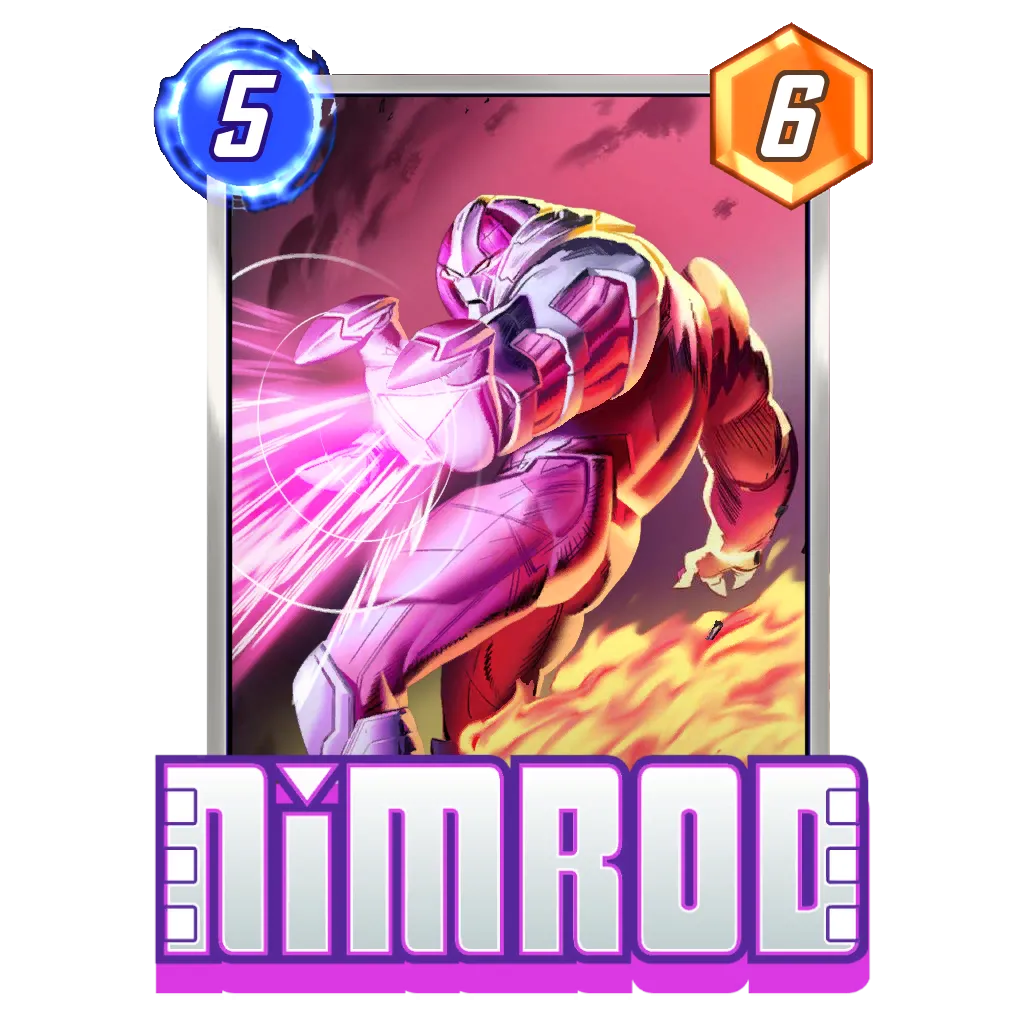
→ 5|6. The latest Season Pass card suffered a lot from the current metagame. Still, it is hard to argue that Nimrod isn’t strong enough to justify building around it. The card sees play, mostly in Galactus decks. But with Shuri likely seeing a nerf, Nimrod will need a little bump in power to be appealing alongside Destroyer and Arnim Zola.
Rhino


→ 3|4. Scarlet Witch outshines Rhino plain and simple. Cards included in decks for their abilities will usually be judged based on their costs. If we factor in that Scarlet Witch exists for cheaper with the same power, there is basically no reason to play Rhino.
Punisher


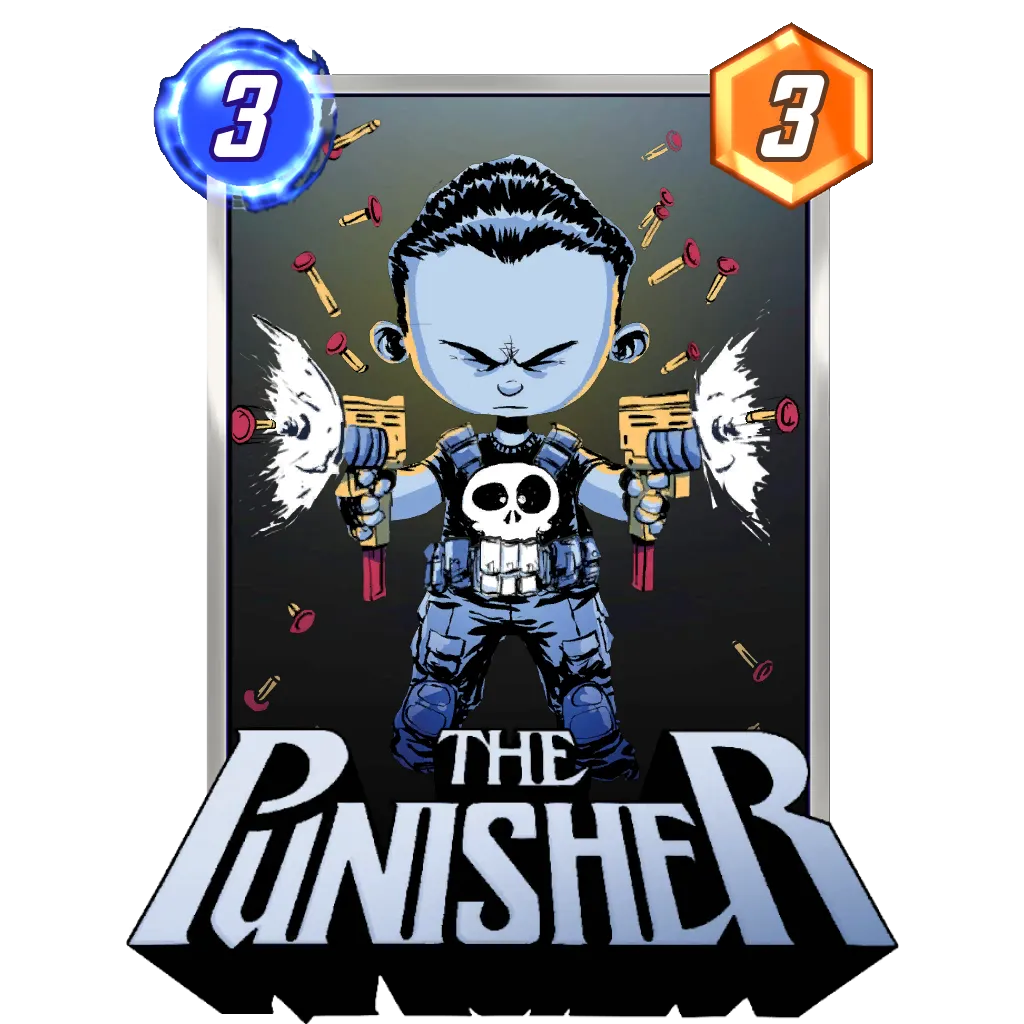


→ 3|3. Three cost cards with a six power ceiling aren’t strong enough anymore, especially when the opponent can control it. Since Punisher is a beginners card, I don’t even expect the change to help it be included in refined builds. It would at least make it a nice consideration against the likes of Captain America and Wolfsbane early on in a player’s experience.
Nick Fury


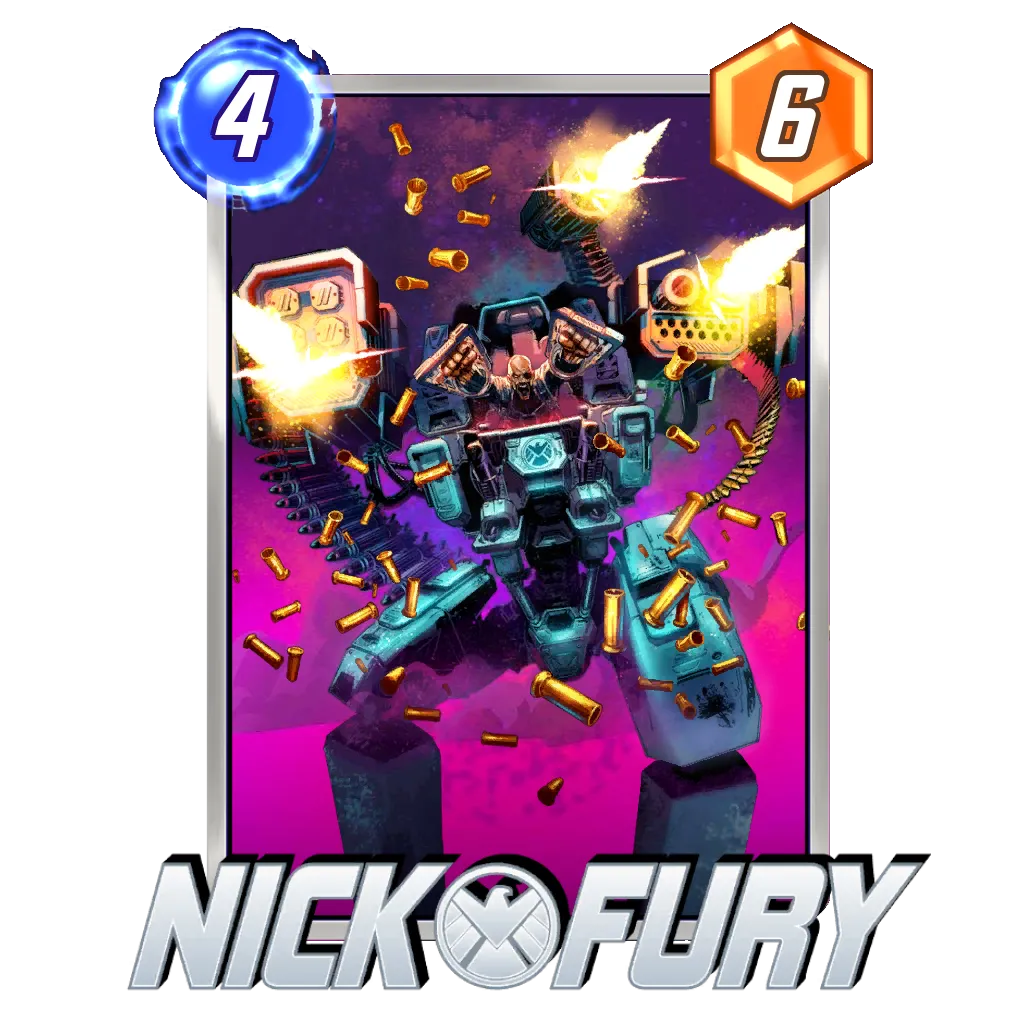

→ 5|8. I wouldn’t even be mad if it went to a 5|9 considering Nick Fury is the most disappointing Battle Pass card to be ever released. I think I’ve seen it be generated more often than included in a deck.
The Thing


→ 4|7. Vanilla cards only have their power for themselves. So when Patriot doesn’t play them, it means the card needs some help.
Abomination


→ 5|10. The Thing, but as a 5-cost card.
Ability Buffs
Changing the way an ability works is always much more risky than simply changing the power of a card. First, these are more subjective because someone will usually target abilities they like or offer directions they think will help the card. Then it’s much harder to guess the impact of the change. It might not lead to the card feeling stronger, while more power will always translate to a stronger card.
Take these suggestions with a grain of salt. These are my views on how to help these cards, and there are other ways of positively impacting these abilities.
Uatu the Watcher


 Decks with Uatu the Watcher
→ Starts in your hand. Unless the card is reworked, it only makes sense to make sure Uatu contributes to the deck he is played in. Depending on how good this ends up being, and to prevent Uatu being a straight-up better Quicksilver, Uatu could become a 1|1.
Angel


 Decks with Angel
→ When one of your cards is destroyed, summon this from your deck. Angel has so many situations where it actually doesn’t summon itself while a card was destroyed. Worded this way, Angel would be summoned if the opponent played Yondu, for example.
Falcon


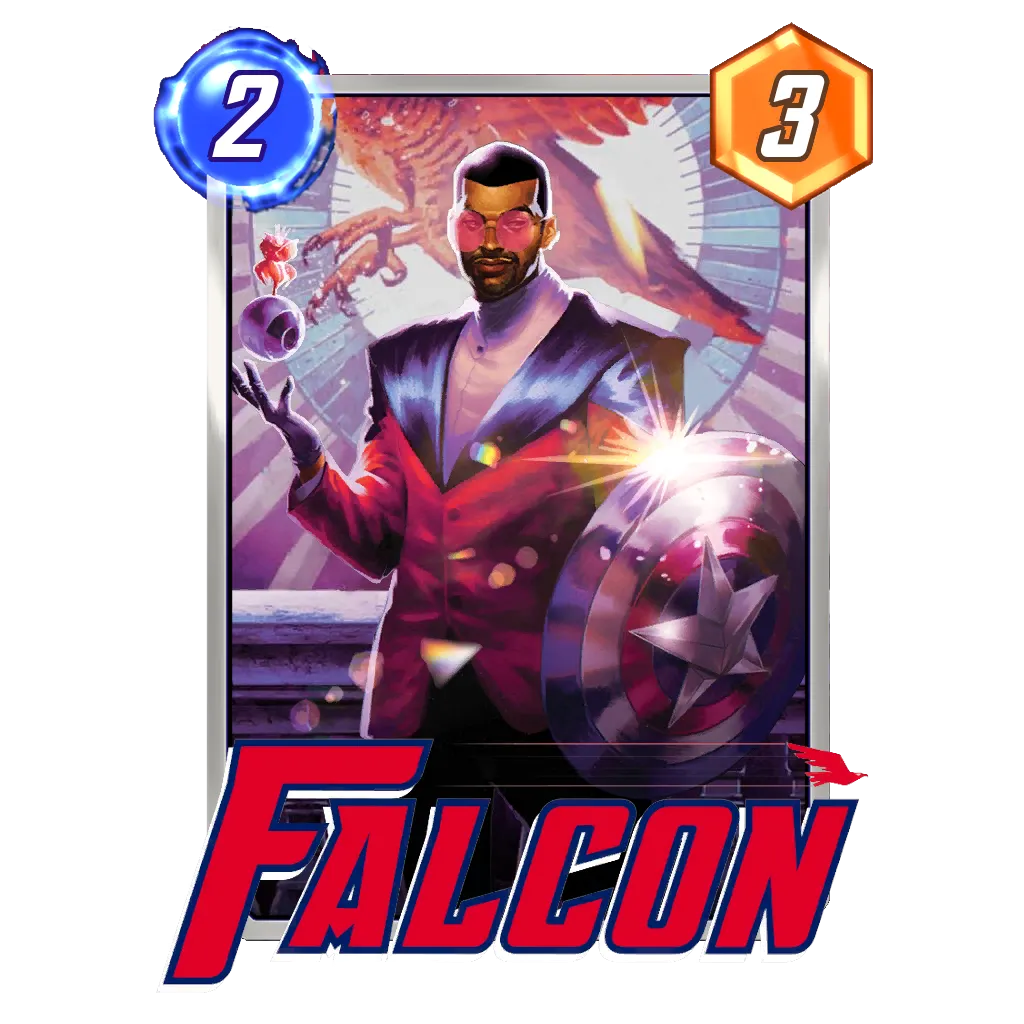

→ Return your 1-cost cards to your hand. They cost 1 less next turn. Compared to Beast, Falcon is laughable, and six turns are often not enough to use the card properly. Reducing the cost of the returned cards for a turn should help Falcon feel more explosive, and help it become a real tool for a deck built around 1-cost cards.
Nakia


→ Give the lowest cost card in your hand +3 power. An ability like this impacting random cards just doesn’t cut it, and buffing Nakia’s power doesn’t feel like a flavorful way of helping the card. With this change, Nakia becomes synergistic with Deadpool, Human Torch, Swarm, and other such cards with power that can be easily manipulated.
Gambit





 Decks with Gambit
→ 3|0 – Discard a random card in your hand. Destroy a random enemy card at this location. I have read ideas around Gambit like making sure it can’t touch a card protected by Armor, but it just feels weird to do it that way. Instead, giving Gambit some sense of targeting should help the card fit into Discard based decks. I lowered its power to 0 as the ability seems strong this way, but I’m not sure if it is necessary.
Quake


→ Move all locations to the left or the right. The idea here is to give the player playing Quake the ability to predict what will happen. Similar to Rhino, Quake never sees play because Scarlet Witch feels so much better. Quake’s power is, however, on par with her cost, so making her ability a little more reliable feels more adapted.
Closing Words
The core of the patch will obviously be focused around nerfing the two decks that have been the best in the game for over a month now. To be fair, the task is already difficult enough considering the many routes available to do so, especially for Thanos Lockjaw. I would be surprised to see much else included alongside its inevitable nerf. Still, it feels necessary to give some cards a little push, if only to remind everyone that they exist. This prevents the patch from simply nerfing two decks and the community from defaulting to the next best thing, thereby limiting the feeling that anything changed at all.
Nailing the perfect changes is extremely difficult to do, and I don’t think the list I offered is one to follow precisely. The more important part is to drive the idea that the patch is bringing some changes while we try to put the difficult metagame most of us endured rather than enjoyed behind us.
Thanks for reading this opinion piece. I would love to read about anyone’s ideas for a good buff to shake things up. You can find me on the Marvel Snap Zone Discord, or discussing the game on Twitter.
Good Game Everyone.



More Content