


If you are a regular player of Marvel Snap, you may have noticed the tone of the game has shifted. Players don’t seem as excited as they once we’re to explore the game’s ever increasing card pool. While many players have their ideas and opinions on what’s wrong with the game, Snap’s underlying issues are actually much more complicated than you may realize.
In this article, I will break down all of the challenges Snap faces and the convoluted situation the developers face. I hope by highlighting these issues, players can understand what’s really going on, and hopefully give any reading developers my viewpoint.
What’s the Underlying Problem?
While many players feel like the game has a single issue, it’s actually much more complicated. There are 3 major factors of the game that make the future of Marvel Snap uncertain. Each of these factors need individual attention to see the big picture.
The Card Acquisition Problem
This is the biggest issue most players are fully aware of. The Spotlight system holds cards hostage for months at a time, and the rate of token acquisition is laughably low. Take Baron Zemo for example. He was the Season Pass card for April of 2024, which was about 8 months ago. He has not had a single Spotlight Cache feature since his release, and he costs 6000 tokens. The Spotlight system is keeping cards from being easily accessible, which is creating a larger issue.


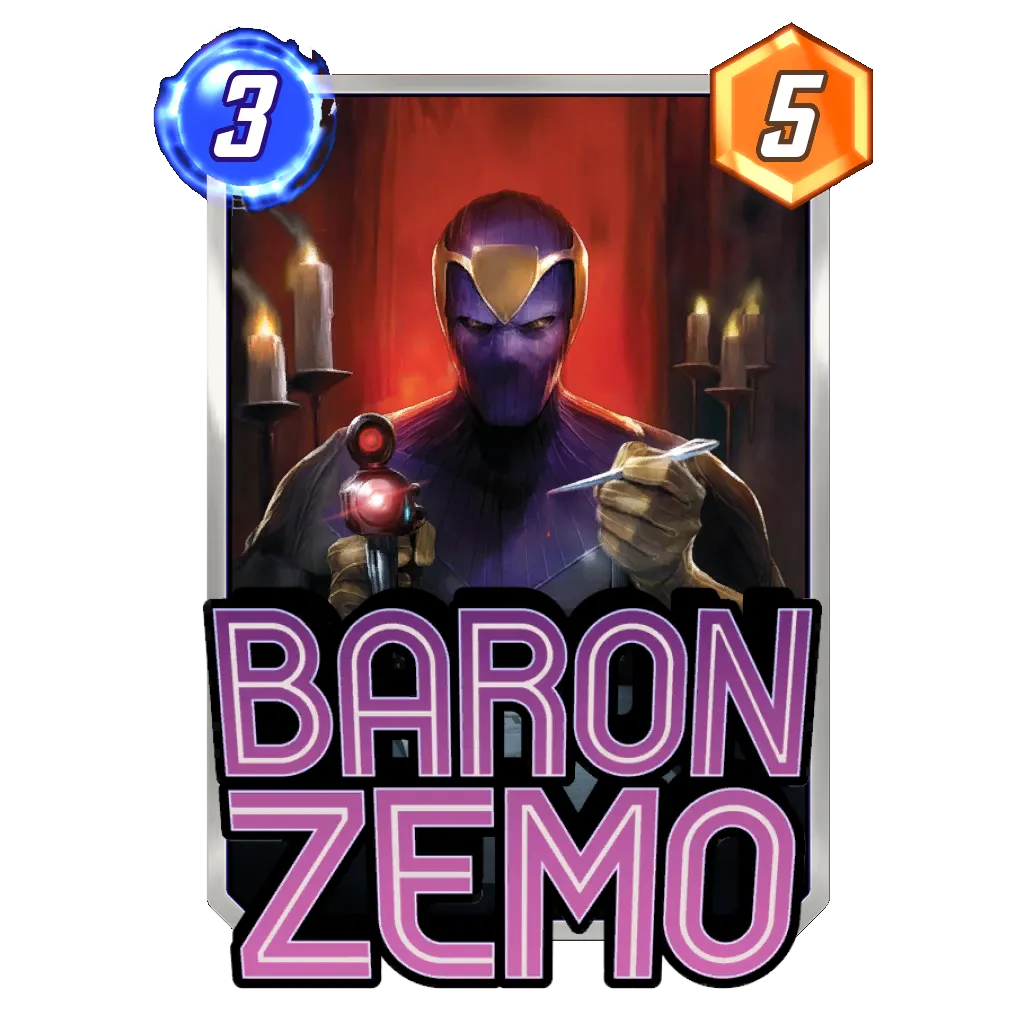


 Decks with Baron Zemo
With Snap’s small deck size, decks are extremely optimized and many cards don’t have equivalent substitutes. When players can’t access cards, they can literally get locked out of entire archetypes. Not only that, but there is no real way for players to quickly get a card they want. If the meta suddenly shifts to a Baron Zemo centered meta for example, many players will have to save up tokens over the course of weeks or months to be able to join that meta. By then, that meta could be long over with new card releases, or because developers buffed or nerfed cards they make Zemo no longer necessary.
This same idea is multiplied dramatically when you talk about new players trying to build decks they see online. If I introduce a new player to Snap and show them a fun deck I’m playing, I also have to warn them it will take them 3+ months to get anywhere close to building that deck. That’s a pretty big turn off for new players.
The game desperately needs Series Drops to return, which will make all of these cards more accessible! The problem, however, is that drops are not as straightforward as the seem…
The Series Drop Problem
Snap has made it very clear that it strives to be an easy entry point for players into the CCG world. The cards are meant to be easy to learn and the game be easy to follow. To accomplish this, they have Series 1 and 2, which are delicately curated to introduce cards to new CCG players to ease them into the game. It accomplishes that goal incredibly well, making the game a very attractive option.
The issue comes in with Series 3. Currently, there are no guidelines for unlocking cards in a certain order. There are currently 109 Series 3 cards, and 3 additional cards will be added to that pool in December. The upcoming Series Drop on December 10, 2024 highlights the issue perfectly.
If you are trying to build a good destroy deck, you need Deadpool, Death, Venom, and even Arnim Zola. You now have to find 4 cards in a pool of 109. That’s a pretty tough challenge, and it doesn’t even get into Series 4 and 5 cards. Now, there are currently 73 Series 5 cards and 27 Series 4 (100 total at the time of writing). Let’s move half of that total card pool down to Series 3, which now brings our total Series 3 pool to 159 cards. That sounds great for veteran players because you now can have a more complete collection. For the newer players, however, those 4 destroy cards they need now have 50% more cards they have to sift through.
Simply put, Series Drops are bloating the biggest Series category we have, and there is no systems in place to help players navigate through that nightmare. I remember waiting weeks and weeks to unlock Venom (he was in the last 5 cards of my Series 3 journey). There are dozens of cards added to the pool now, so I can only imagine the elevated frustration players feel now trying to get cards.
To pile on the issue even more, bad cards are the ones that have been getting Series Drops! The upcoming drop puts Jean Gray and Snowguard into the Series 3 pool. These cards see virtually no usage, so giving them out for free only further clogs the pool.
The battle to acquire cards across all players has reached a boiling point. People can’t play the decks they want, and they can’t keep up with the meta and are losing games because of it. There is a temporary solution to this problem for many players, but it really creates a new problem for Second Dinner to fix.
The Arishem Problem
Arishem was added to the game this year with the Eternals season. By playing with Arishem, players of all collection levels now have access to every card in the game. You can get your hands on any card and play it with the extra energy available to you. Many players adore this card as it feels like an entirely new game mode.

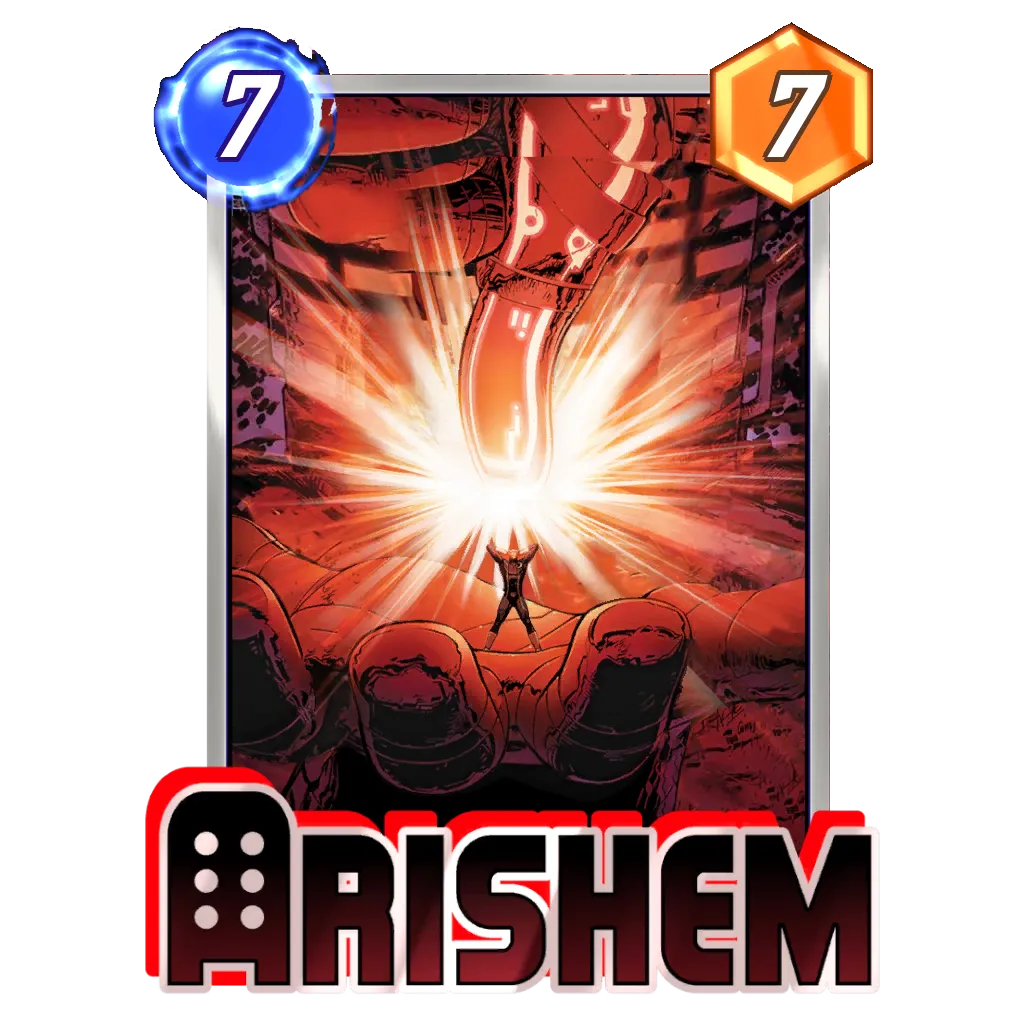


 Decks with Arishem
In the upper collection levels and Infinite ranks, Arishem is a totally different story. The extra energy he creates warps the balance of the game, allowing an unpunishable ramp that rewards luck. Furthermore, it allows certain cards to be heavily abused such as a turn 5 Alioth. Alioth was balanced to be a turn 6 card unless you invest in ramp resources. Arishem allows Alioth, and other cards, to essentially break their Cost balancing and get the equivalent of -1 Cost.
The other major issue Arishem creates is breaking the game’s core function: Snapping. Playing against Arishem, you literally have no idea what cards they have. They can draw the exact counters they need to beat your, despite not having to use deck slots to include that tech card. You can’t safely Snap into Arishem because you could easily be thwarted by a random, unpredictable card they drew.
To further this issue, Arishem players have a huge advantage in Snapping. They can read into your deck and plan plays ahead. If your opponent Snaps while you play Arishem, you can easily tell if your cards are getting enough to compete with that deck. Simply put, you can manage your cubes significantly easier when playing Arishem.
When you bring Arishem into Conquest, you create a massive advantage. Your opponent can’t learn your deck and adapt after each match, but you can. They have to constantly play around every card in the game, you play around what you know they have without a doubt. Of course people use Cassandra Nova and Darkhawk to counter Alioth, but you can just as easily be countered with a Shang-Chi or Shadow King.
I bring up the Arishem issue not to complain about the card, but to highlight a major stress point for a large number of players. The inability for players to consistently have a “normal” match that they can utilize their game knowledge in creates a constant point of contention.
Understanding How These Issues Connect
As you can tell, Snap has a very complicated problem that is more than a simple “more Series Drops” can fix. You see, if cards keep dropping in Series, the game becomes less and less new player friendly, or even returning or intermittent player friendly. If you keep those cards at a higher Series, they become too difficult to obtain for the general player base. When more and more of the player base can’t build a viable, competitive deck, Arishem is an easy way to give those players an avenue to care less about getting new cards.
When you can’t unlock cards you need, can’t keep up with the constant release of new cards and events, and now can’t even predict what your opponent is going to play, you are really testing your player’s love for the game. There is only so much frustrating aspects of a game you can have before you cross that line from “fun and addicting” to “infuriating and a chore”. Video games are meant to be a break from reality and a form of fun and relaxing. Making every day a grind turns the game into a job.
If each of these issues remain unaddressed, the game will continue to lose players. People who can’t get cards will drop it entirely or swap to Arishem. Players who enjoy Conquest or love the aspects of Snapping and reading your opponent will continue to see more and more random decks thanks to Arishem. This makes the game feel less competitive and much more frustrating, leading these kinds of players to drop the game. Then you have the players that simply see what’s going on and are dropping the game out of protest.
All of these reasons to drop the game entirely are totally valid, and Second Dinner has a real challenge on their hand to clean it all up. Unfortunately, time is not on their side. With more competition releasing like Pokémon TCG Pocket, Second Dinner is running out of time before Snap becomes a thing of the past.
How Do You Fix It All?
Despite all of the games major issues, and even minor issues that I haven’t even mentioned, there is still the opportunity to fix the game. Any solutions though are no simple feat, as the issues revolve around the entire economy of the game.
I would like to give Second Dinner a little credit, building a strong in-game economy for a live service game is no easy task. World of Warcraft developers knew this, so they hired literal economists that study real world economies to help develop their system. Second Dinner did try to add ways for players to target specific cards they wanted, but the system they created wasn’t sustainable in the long term, and now they have to restructure the entire thing again. I sympathize with players begging to see actual changes implemented or announced, but I also know the situation developers are in is not as simple as we want it to be.
I have ideas on ways the game could implement changes, but I don’t see the behind the scenes of the company. There are many factors I won’t be able to factor in, including how much monetization plays into this free to play game. I can still offer some rough ideas though:
1. Make Series 3 more curated and limit matchmaking for players to the Series they are in
Once you finish Series 3, just give access to all of the cards by leveling up. Stick with your plan announced last year of “doubling down on cosmetics being the main monetization method”. You have all kinds of new borders and backgrounds on the way. When players can play whatever deck they want, they are much more likely to be invested and want to buy cosmetics.
2. Temporarily disable Arishem
I know many players will not like this idea since they enjoy the card. I play Arishem a bit myself, I understand removing him is like removing a game mode for you. With that said, he is undeniably a huge point of the game’s frustration. Developers clearly need to rethink how to solve this card’s divisive issue, but keeping frustrated players constantly playing against him is not a great way to retain your player base. Take him offline for a bit, figure out a real way to solve the issue, and bring him back to all players for free (like Kitty Pryde). Unless they have a solution planned for the near future, this could alleviate a large stress point on the game.
This doesn’t solve the game’s acquisition issues, but it puts the meta in a healthier state. A healthy meta is much more fun to play in, which can buy devs a bit more time while they tackle that issue.
3. Create selectable Series “packs”
If you want the game to remain curated, while also having different Series, go the Pokémon Pocket route. Want to spend your spotlight keys, roll for this week’s feature of Series 3 cards in the Series 3 pack! 4 cards can be featured each week for each Series. This way players can better target the collection they need more of.
With this idea, you would divide up cards across Series more evenly. There’s no need for Series 4 to have 27 cards while Series 5 has 73. Furthermore, you can add new Series as new cards release. As the existing Series begin to fill up, take a bunch of cards out and move them into the new Series. This system allows developers to keep their current economy of Spotlight Caches and Tokens, but it makes collecting cards you need much more tangible. New players can feel more connected with high CL players by having easier access to the fun cards they see outside of their Series. If the player is new to CCG’s and wants to keep things simple, they can focus on Series 3 as they continue to gain CL. This also helps players catch up significantly easier without breaking the economy.
Out of these ideas, I find option 3 to be the best option, and possibly combine it with option 2 while you design it. They would need to design a UI that allows you to select a specific Series pack. Then they would need to create a Spotlight feature for each Series, leaving space in the UI to incorporate future Series. They would have to reassign card Series to better curate experiences. This idea would allow them to stop doing Series Drops, and move toward Series Swaps. As the card pool increases, they will need to reassign cards into a new Series since they don’t do bulk card releases to Jumpstart a series. If they can design this and implement it well, it could really help tackle the card acquisition issue.
Summary
The state of Marvel Snap right now isn’t great. The game suffers from a number if issues that if unaddressed will lead to the death of the game. While things feel bleak, there is still time for Second Dinner to make some changes. While the Arishem dilemma doesn’t directly corelate with card acquisition issues, they both feed into the same issue of creating a stale environment for the game.
These issues come from my point of view, and yours might be totally different. I want to hear what you feel are the game’s biggest issues. Let me know in the comments what your thoughts are, if you agree or disagree with my views, or if you have any ideas for improvements.



More Content